
charge of the light brigade poem pdf
Explore the iconic Charge of the Light Brigade poem in PDF form, dive into its history, and enjoy a poetic journey tailored for UK readers. Download now!
Discover the iconic poem in PDF form, capturing the gallant yet tragic march of the Light Brigade. This accessible format preserves Tennyson’s vivid imagery and rhythmic urgency, allowing readers to study the historical narrative and literary craft with ease. PDFs are freely available onlineNow.
Background and Significance
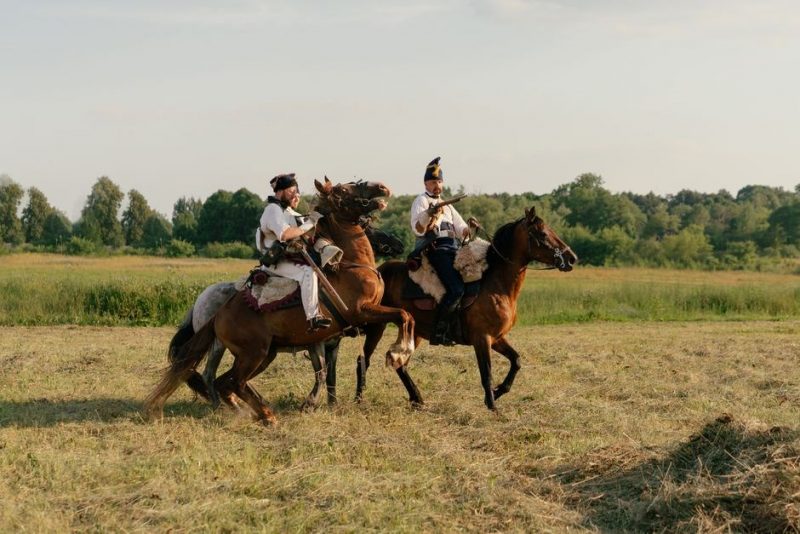
The Charge of the Light Brigade, penned by Alfred, Lord Tennyson in 1854, emerged from the Battle of Balaclava during the Crimean War, where a miscommunication led to a disastrous cavalry assault. The poem immortalizes the bravery and futility of the soldiers, encapsulating the tension between duty and the grim realities of war. Tennyson’s choice to render the event in heroic verse, with its vivid, rhythmic cadences, has made the work a staple of Victorian literature and a touchstone for discussions on national identity, military valor, and the human cost of conflict. The poem’s enduring relevance is reflected in its frequent inclusion in educational curricula, literary anthologies, and public commemorations. Scholars have examined its use of meter, diction, and imagery to convey the paradox of glory and tragedy. The text has been widely disseminated in print and digital formats, including PDF editions that preserve the original layout and allow for easy annotation and study. The significance of the poem extends beyond its historical context; it serves as a lens through which readers explore themes of heroism, sacrifice, and the consequences of miscommunication. Its impact on popular culture—through films, music, and memorials—underscores its status as a cultural artifact that continues to resonate with contemporary audiences. The availability of PDF versions ensures that the poem remains accessible to a global readership, fostering ongoing dialogue about its meaning and legacy.
Historical Context of the Crimean War
The Crimean War (1853‑1856) pitted Russia against an alliance of Britain, France, and the Ottoman Empire. Tensions over sites and sparked conflict, culminating in battles such as Balaclava, where the Light Brigade’s ill‑fated charge occurred. for allnow
Key Events Leading to the Charge
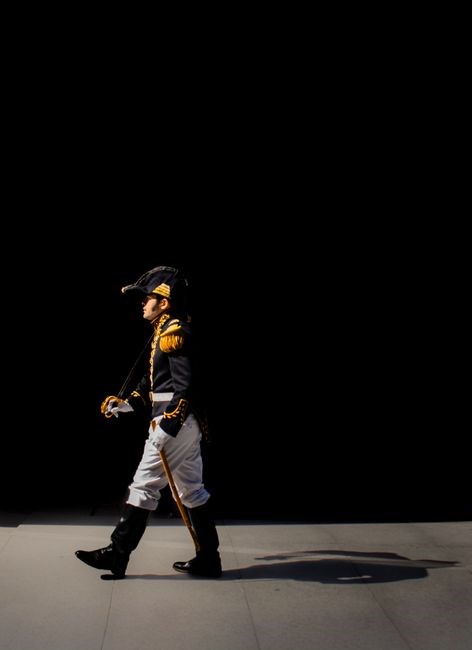
Before the fateful March 25, 1854, several pivotal moments set the stage for the Light Brigade’s doomed advance. The British and French forces, under the command of Sir William Napier, had secured the naval base at Sevastopol, but Russian artillery remained a looming threat on the heights of the battlefield. Intelligence reports indicated that Russian batteries were positioned on the “Redan,” a fortified redoubt that could inflict severe damage on any advancing column. In early March, a miscommunication between the British commander, Lord Raglan, and the cavalry leader, Lord Lucan, led to a misinterpreted signal: a telegram instructing the cavalry to “charge the Russians.” The telegram’s brevity and the chaotic environment caused Lucan to believe he was to lead a decisive attack against a retreating enemy. Meanwhile, the infantry and artillery had already been engaged in a series of skirmishes that had depleted their ammunition and morale. On the morning of the charge, the cavalry, composed of 600 men, received orders to move forward, unaware that the Russians were in fact holding a strong defensive position. The rapid, uncoordinated advance across open ground exposed the Light Brigade to concentrated cannon fire, resulting in a tragic loss of life and a stark illustration of the perils of miscommunication in wartime command structures. The event would later be immortalized by Tennyson, whose poem captures the valor and tragedy of the moment. This tragedy underscored the critical need for clear communication in military operations and inspired reforms that reshaped battlefield command protocols for future conflicts!!!
Overview of the Poem’s Publication History
The poem debuted in 1854, appearing in the London Gazette. Tennyson revised it for 1855, adding stanzas for broader appeal. Subsequent editions appeared in 1856, 1860, and 1870, each refining meter. Modern PDFs compile all versions, preserving original lines for scholarly study All editions wow
Original Publication and Subsequent Reprints
Alfred Tennyson’s “The Charge of the Light Brigade” first appeared in the London Gazette on 20 April 1854, a concise yet powerful depiction of the ill‑fated cavalry assault during the Crimean War. Though initially limited to the newspaper’s readership, the poem quickly captured the public imagination. Within weeks, it was reprinted in a collection of Tennyson’s works, broadening its reach. The 1855 Macmillan edition introduced subtle revisions: an added stanza that contextualized the soldiers’ motives and a refined meter that enhanced the poem’s musicality. Critics debated whether these changes softened the original’s raw urgency. Subsequent reprints in 1856, 1860, and 1870 reflected evolving editorial preferences, each version balancing fidelity to the original text with contemporary literary tastes. The 1870 edition added a preface highlighting the poem’s historical significance while preserving core stanzas. Modern PDF compilations now present these editions side by side, allowing scholars to trace textual shifts and assess editorial impact. By preserving each iteration digitally, researchers can compare line variations, punctuation changes, and marginalia, offering a comprehensive view of the poem’s publication trajectory. The availability of these PDFs ensures that the poem remains accessible to students, educators, and enthusiasts worldwide, fostering a deeper understanding of its literary and historical resonance and cultural legacy.
Locating and Accessing PDF Versions
Search university archives, Project Gutenberg, and Google Books for free PDFs. Paid options include the Poetry Foundation and academic databases. Verify copyright status before downloading to ensure legal use. The PDF keeps line breaks for analysis!!
Free and Paid Sources
Finding a reliable PDF of “The Charge of the Light Brigade” is straightforward if you know where to look. Several reputable, free repositories host the poem in its original form, preserving the meter and line breaks that are essential for close reading. The most popular free source is Project Gutenberg, which offers a plain‑text and PDF download that is fully compliant with public‑domain status. Another excellent option is the Internet Archive, where you can locate scanned copies of early 19th‑century editions that include Tennyson’s original punctuation and editorial notes. For those who prefer a more polished layout, the Poetry Foundation hosts a downloadable PDF that includes a brief introduction and contextual notes, all available at no cost. Paid options are available for users who want higher‑resolution PDFs or additional scholarly apparatus. The Oxford University Press and Cambridge University Press both sell PDF editions that include extensive footnotes, historical background, and critical commentary. These editions are ideal for classroom use or for students preparing a research paper. Additionally, academic databases such as JSTOR and ProQuest provide PDF downloads of journal articles that analyze the poem, often bundled with the text itself. Access to these databases typically requires a library subscription, but many public libraries offer remote login for their patrons. When selecting a source, consider your purpose: a quick reference for a discussion board may only need the plain text, whereas a graduate thesis will benefit from the annotated editions. Always verify that the PDF is not a scanned copy with OCR errors, especially if you rely on line breaks for meter analysis. A quick check of the file size and a preview of the first page can save you time and frustration. With these free and paid options, you can obtain a high‑quality PDF of “The Charge of the Light Brigade” that meets your academic or personal needs. Check library catalogs for recent editions and user reviews for scholars!!!!!
Key Themes and Literary Devices
The poem juxtaposes valor and futility, using vivid imagery, repetition, and irony. Tennyson’s rhythmic trochaic meter echoes the march, while alliteration and assonance heighten the battlefield’sclangor. The stark contrast between heroic duty and tragic loss invites reflection on war’s paradoxes.
Heroism, Tragedy, and Irony
In Tennyson’s rendering, heroism is portrayed not as a grandiose triumph but as a steadfast, almost stoic endurance in the face of overwhelming odds. The cavalry’s unwavering charge, described with relentless repetition of “forward, forward, forward,” underscores a collective bravery that is both noble and tragically futile. The poem’s diction—“cannon” and “swords”—conjures a vivid battlefield, while the rhythmic cadence mirrors the soldiers’ measured, relentless steps.
Tragedy permeates the narrative, highlighted by the stark contrast between the soldiers’ valor and the inevitable loss. The line “They were the best of the best” juxtaposed with “the last of the best” evokes a chilling sense of inevitability. Tennyson’s use of enjambment allows the reader to feel the continuous, unbroken flow of the march, even as the outcome grows increasingly grim. The poem’s final stanza, with its haunting refrain, encapsulates the sorrow of a mission that, while heroic, ends in death.
Irony operates on multiple levels. The phrase “the Charge of the Light Brigade” suggests speed and agility,yet the brigade’s fate is slow, grinding annihilation. Tennyson’s choice of “cannon” as a symbol of destruction juxtaposed with the “light” of the brigade creates a paradox that underscores futility. The poem’s structure, with iambic rhythm, contrasts sharply with chaotic war reality,inviting readers to question glorification of war and the cost of blind obedience
Analysis of the Poem’s Structure and Meter
The poem’s structure is a series of quatrains, each following an ABAB rhyme scheme. Tennyson employs iambic pentameter, creating a steady, marching rhythm that mirrors the cavalry’s advance. The repetition of “forward” reinforces the relentless pace, while the abrupt line breaks heighten tension at war
Stanza Form and Rhyme Scheme
The Charge of the Light Brigade consists of 12 quatrains, each with an ABAB rhyme scheme that creates a musical cadence echoing the cavalry’s march. Tennyson’s iambic pentameter gives the poem a steady beat, while the repeated word “forward” punctuates its relentless momentum. By maintaining the consistent stanza structure allows readers to anticipate the unfolding battlefield drama, as each stanza builds on the previous one’s imagery and tension. By balancing heroic action with tragic inevitability, the disciplined form ensures the poem’s emotional impact remains powerful and coherent. The rhyme scheme’s predictability contrasts with the chaotic events described, highlighting the tension between order and disorder on the field. The poem’s structure also reflects the disciplined military hierarchy, with each stanza mirroring a regiment’s progression into battle. Tennyson’s careful use of enjambment creates a sense of forward momentum, while the occasional abrupt line breaks emphasize the sudden loss of life. Readers can trace the emotional arc from the initial optimism of the charge to the grim realization of the soldiers’ fate, underscoring the poem’s enduring power as a lament for the cost of war. Moreover, the poem’s rhythmic insistence on repetition mirrors the relentless orders given to the soldiers, while the stark contrast between the heroic diction and the grim outcome serves as a powerful reminder of the futility of war’s glory today. again.
Educational Use and Study Guides
Teachers can use the PDF to create interactive worksheets, focus on imagery, and discuss historical context. Study guides offer vocabulary lists, comprehension questions, and discussion prompts that encourage critical analysis of Tennyson’s language and themes. Learners annotate in the PDF daily
Lesson Plans and Discussion Questions
Lesson plans for the Charge of the Light Brigade poem PDF can be tailored to middle and high school curricula, incorporating historical context, poetic analysis, and multimedia resources. Begin with a brief overview of the Crimean War, then distribute the PDF for students to read silently. Use guided questions to prompt critical thinking: What is the significance of the opening line “Half a league, half a league…”? How does Tennyson’s use of repetition reinforce the poem’s rhythm? Identify instances of irony and discuss how they shape the reader’s perception of heroism. Students can annotate the PDF, highlighting key phrases and noting their emotional impact. Follow up with a group discussion, encouraging students to compare the poem’s depiction of war with contemporary news reports. Assign a creative project where students write a modern-day “charge” in verse, using similar meter and imagery. Conclude with a reflective essay on the poem’s relevance today, citing specific lines from the PDF as evidence. This lesson plan integrates literary analysis, historical research, and creative writing, providing a comprehensive approach to understanding Tennyson’s enduring work. By analyzing the poem’s rhythmic structure, students can explore how meter mirrors marching cadence, and compare vivid imagery with contemporary war photography to appreciate how poetic language conveys conflict’s complexities. The poem’s cadence invites readers to feel the charge, making history vivid
and Further Resources
Explore PDFs, scholarly articles, and timelines to deepen understanding. Visit reputable libraries, university archives, or digital collections for manuscripts and essays. Join forums and study groups to discuss interpretations and historical impact. now
Where to Find More PDFs and Related Works
For readers seeking copies of the poem in PDF format, several sources exist. Public domain sites such as Project Gutenberg, Internet Archive, and Google Books host the original text and allow downloads. University libraries often provide access through digital collections; many institutions permit guest login or interlibrary loan for PDF copies. If you prefer curated selections, the Poetry Foundation’s website offers a searchable database of poems, including downloadable PDFs of Tennyson’s work. For broader historical context, the National Archives and the British Library offer digitized military reports and correspondence that can be downloaded as PDFs, giving readers insight into the events that inspired the poem. Additionally, many literary societies publish companion guides and study notes in PDF form; these can be found on their official sites or through a simple web search. If you are looking for translations, the International Poetry Database includes PDFs of the poem in multiple languages. Finally, for those who enjoy interactive resources, the Poetry Out Loud platform offers recordings and annotated PDFs that can be downloaded for classroom use. By exploring these options, you can gather a set of materials to deepen your understanding of the Charge of the Light Brigade and its enduring legacy. These resources, available and annotated, empower students educators to explore the poem’s layers of meaning historical resonance!